



Development cooperation
People are at the heart of our commitment.
Together with our partners, we want to promote and support the fight against
poverty and hunger and for healthy people in a healthy environment.
With our
know-how, gained from a lifetime of experience, we want to help advance the
global transition to a sustainable, climate-friendly,
and nature-compatible
economy, while at the same time strengthening peace, freedom, and human rights.

From development aid to development cooperation
The term “development aid” has been used since the 1950s to describe the provision of assistance by a donor country to a recipient country.
The term emphasized the need for assistance in developing countries and largely reduced them to the role of recipients.
There were no standards or studies on the effectiveness and efficiency of the assistance provided.
In the German government's current concept of „development cooperation“, countries and organizations with which it cooperates on development policy are not recipients of aid, but equal partners.
The goals of cooperation are set jointly, measures are planned and implemented jointly, and responsibility for successes and failures is shared.
The goal of development cooperation is to bring about a sustainable improvement in global economic, social, ecological, and political conditions, leading to a socially just, ecologically viable, and sustainable form of globalization.
Bundesministerium für wirtschaftliche Zusammenarbeit und Entwicklung
Our Goals
- Fighting poverty and improving living conditions in developing countries.
- Promoting social justice and sustainable development.
- Strengthening economic and social structures in developing countries.
Forms of support:
- Financial resources for projects and programs.
- Technical assistance and knowledge transfer.
- Exchange of skilled workers and know-how.
- Support for education, healthcare, and infrastructure.
Principles:
- Helping people help themselves:
- Support should enable people in developing countries to solve their problems independently and shape their own future.
Sustainability:
- Measures should have long-term positive effects and not just offer short-term solutions.
Partnership:
- Cooperation between industrialized and developing countries should be on an equal footing.
Examples:
- Construction and building of schools, hospitals, shopping centers,
- Recreation areas for families, Rehabilitation centers, kindergartens
- Provision of clean drinking water and food.
- Support for small farmers and entrepreneurs.
- Promotion of education and training.
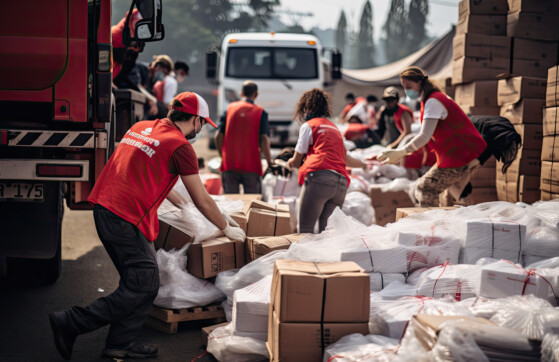

We are building bridges between rich industrialized nations and countries in urgent need of assistance...
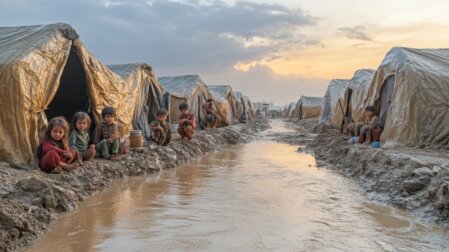
....so that images like these become a thing of the past and these children can grow up in humane conditions.

With my resources and those of my partners,
we want to try to ensure that such images become a thing of the past.